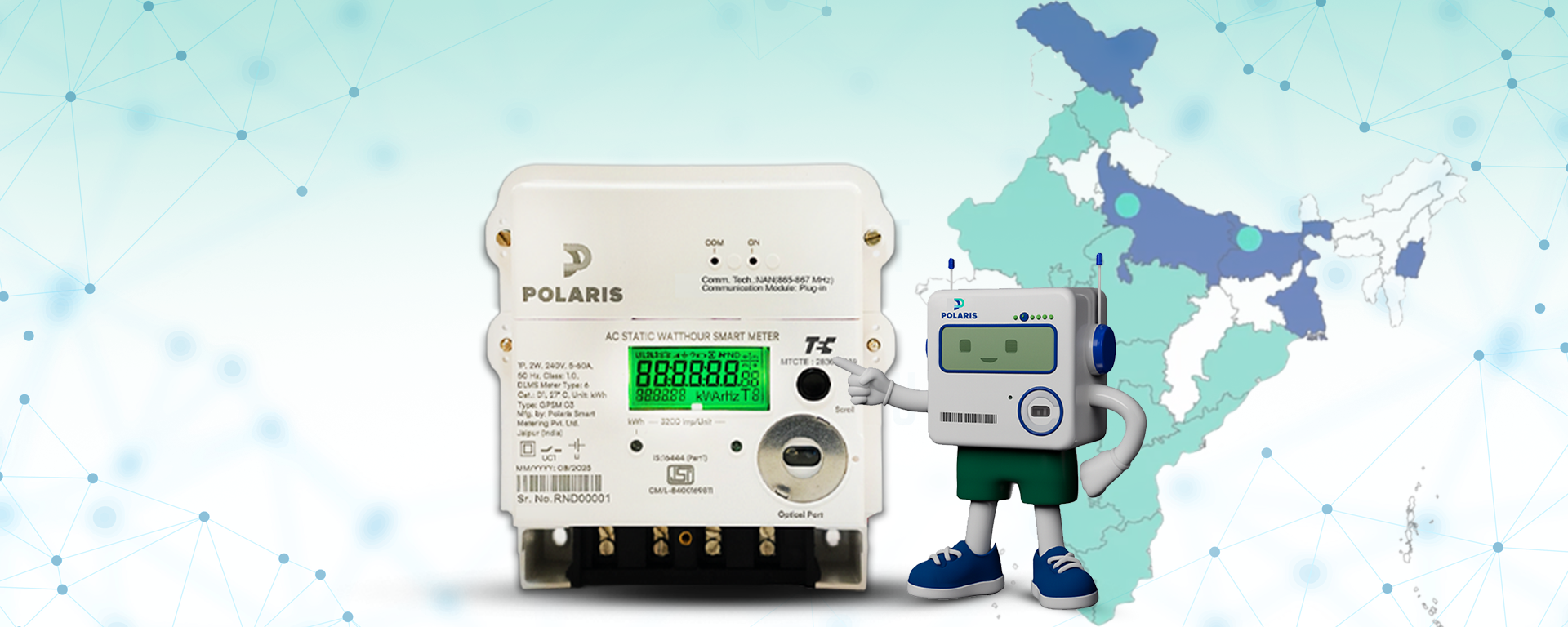
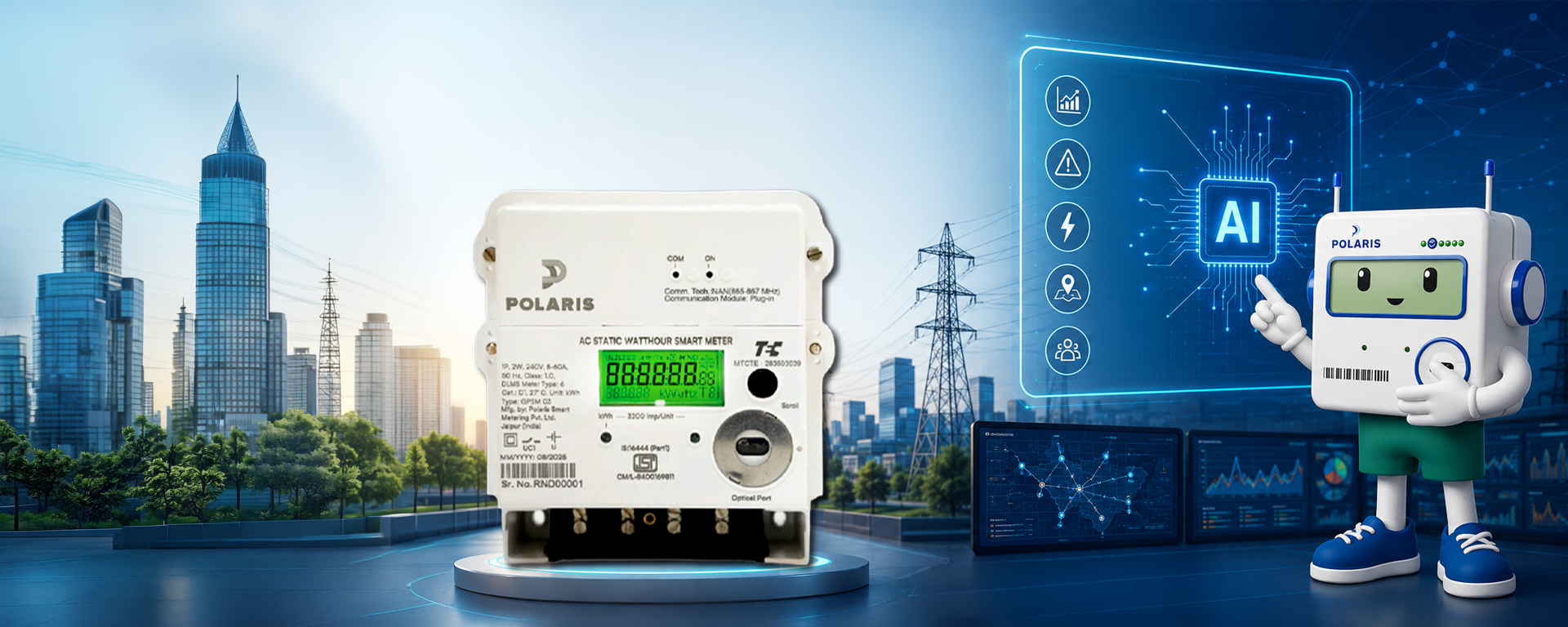
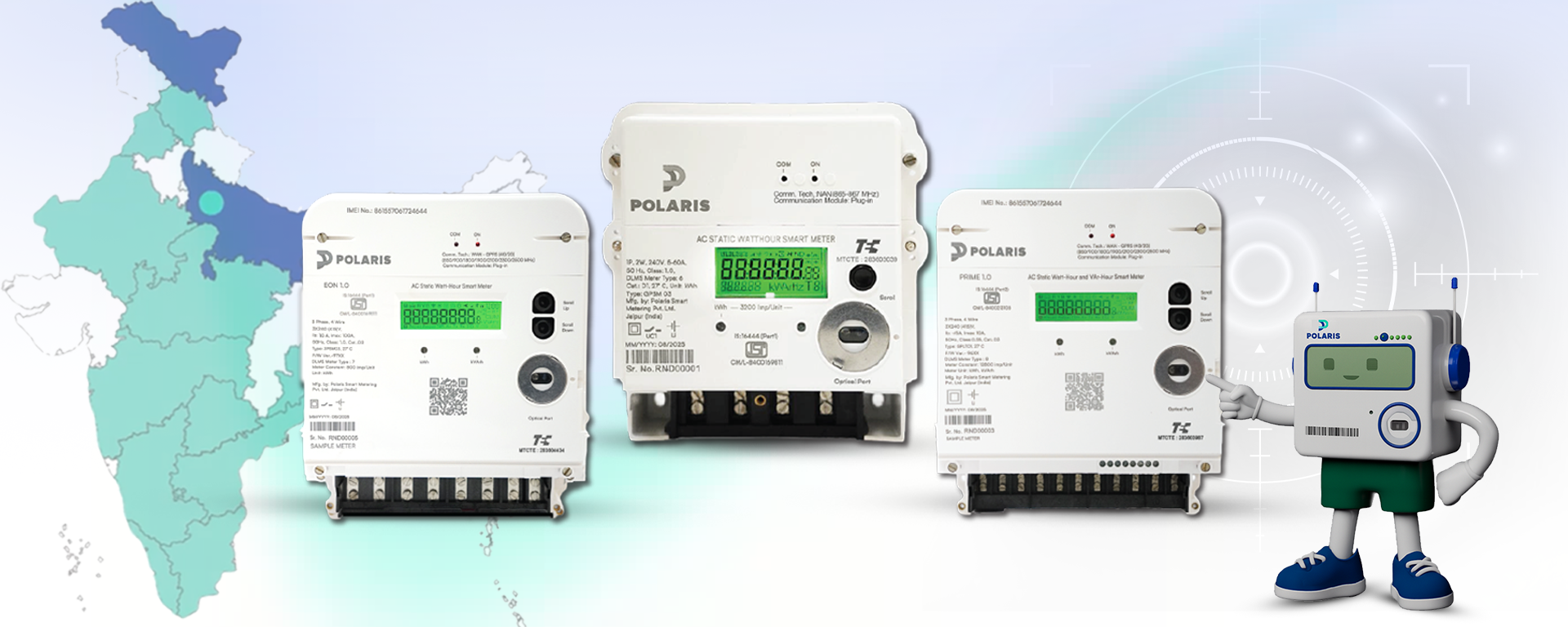
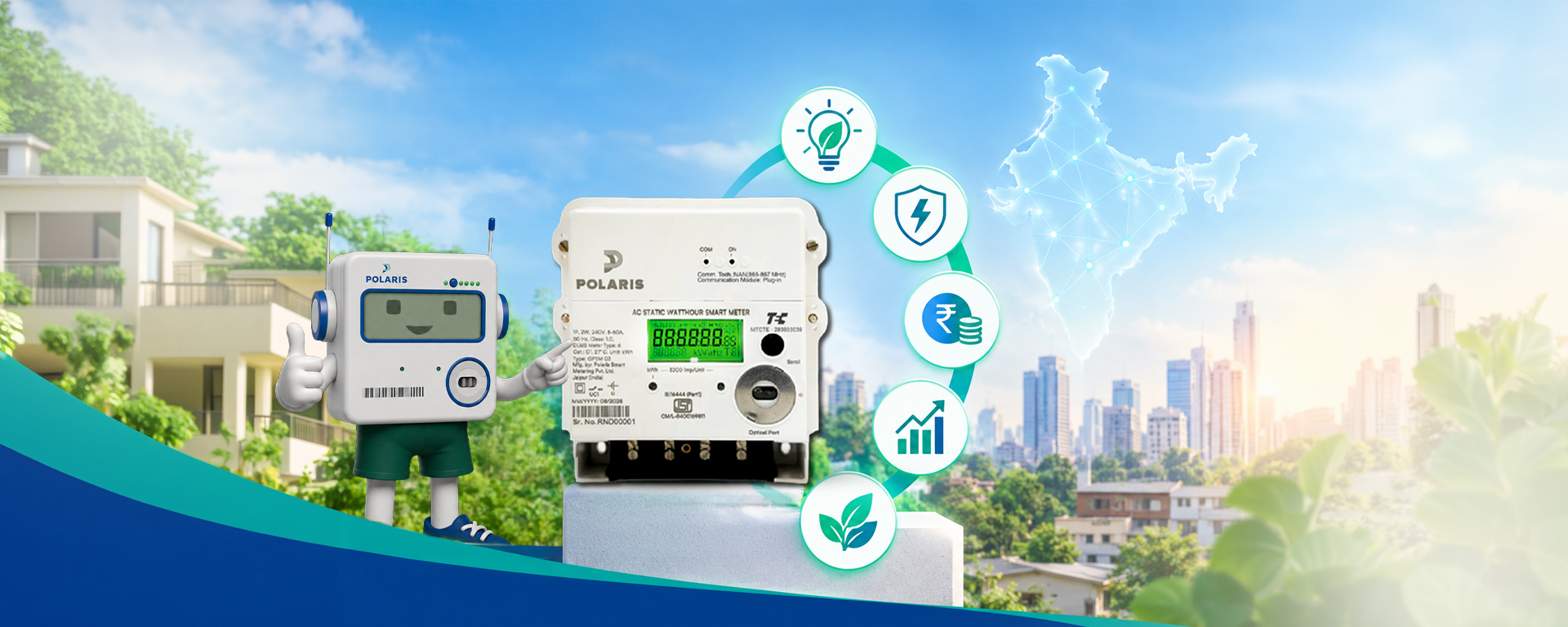
Hey, I'm ORBI!
How Smart Meters Help Detect Faults Faster?
 Smart Metering
Power cuts are frustrating. But for electricity distribution utilities, the bigger challenge often begins after the power goes out: knowing exactly where the fault has occurred and how quickly it can be resolved.
Traditional power distribution systems were built in an era when real-time visibility into the network simply did not exist. When a fault occurred, utilities waited for customer calls to start identifying the affected area. Engineers were dispatched based on general directions, rather than precise location, and field teams then had to inspect feeders, transformers and distribution lines to locate the actual fault.
This process is inherently reactive.
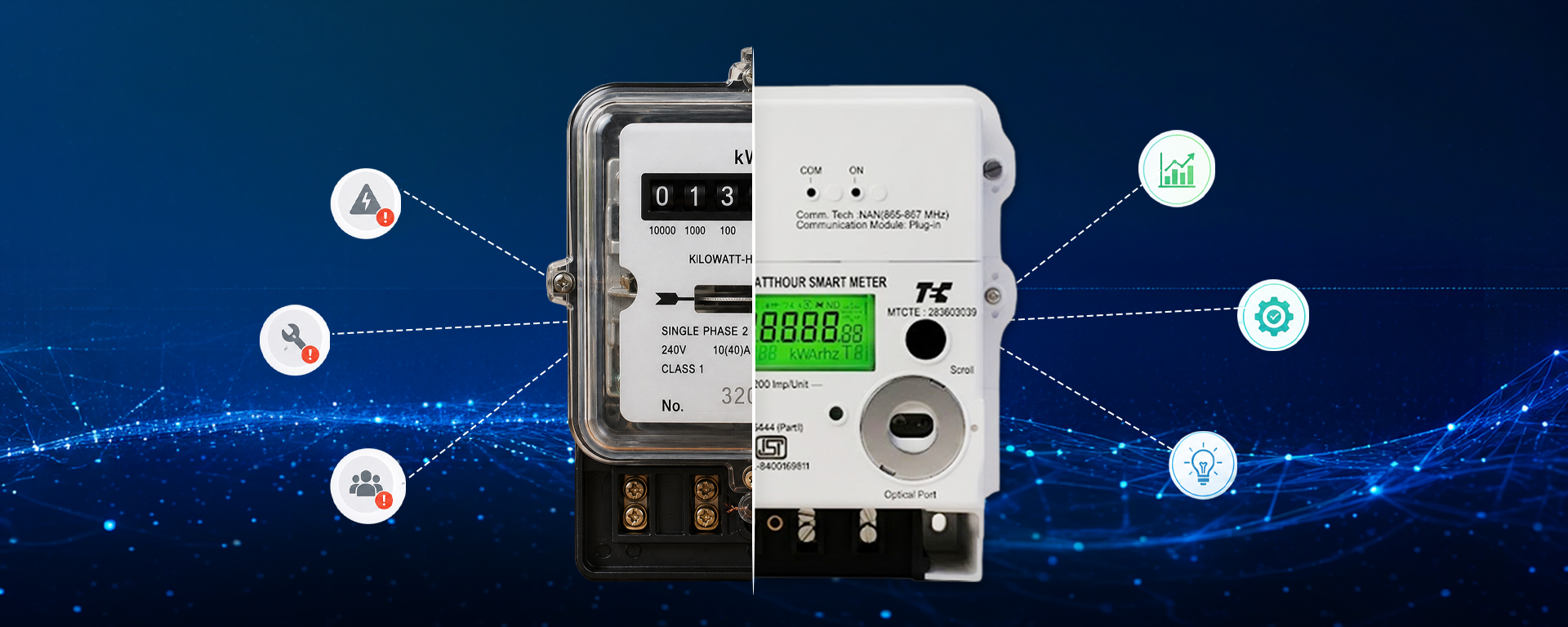
Smart metering changes that equation by turning every connected meter into a source of network data. A smart meter is not a repair tool. Its value lies in the information it continuously generates about the condition of the connection and the network around it.
And in power distribution, having the right data at the right time can make the difference between a short outage and a prolonged one.
Before smart metering infrastructure was in place, a utility's process for identifying and responding to a fault followed a predictable pattern. A section of the network went down. Consumers in that area noticed, waited, and then began calling the helpline. The utility's control room would start receiving calls from a cluster of addresses and use that cluster to estimate the boundary of the affected area. Field teams would then be sent out to inspect feeders, transformers, and distribution lines within that estimated zone.
The problem with this approach is that it is reactive by design. The utility only knows something is wrong when consumers report it. If the fault is in a lightly populated area, or if it occurs at night when people are asleep and not noticing that power is out, the response lag can be significant. By the time a crew reaches the fault location, considerable time has already passed.
There is also the accuracy problem. An area defined by incoming complaint calls is an approximation. Engineers may spend time inspecting parts of the network that are working fine before they find the actual source of the failure.
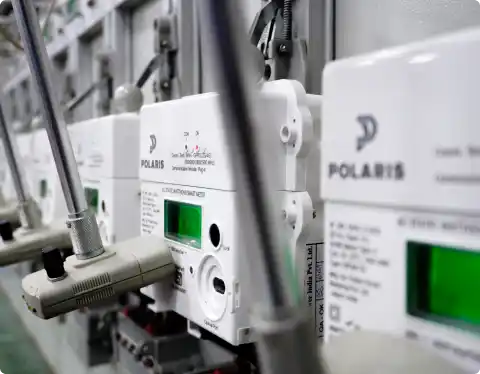
A smart meter does not just record consumption. It reports the status of the connection at the consumer's end at regular intervals. When power is interrupted at a meter location, that meter sends a signal before it loses power entirely, essentially alerting the system that this particular connection has gone down at a specific timestamp.
When dozens or hundreds of meters in a geographic area send this signal within a very short window, the utility's data management system can map the outage boundary with precision. Instead of triangulating from complaint calls, the control room sees exactly which meters are offline, where they are located, and when they went offline. The crew that goes out to investigate goes to the right location from the first dispatch.
This alone reduces response time considerably. But it is only one part of what smart metering infrastructure contributes to fault detection.
Modern smart meters continuously monitor voltage levels at the consumer's premises and log deviations from the expected range. This matters because most electrical faults do not happen without warning. They are preceded by conditions that indicate the network is under stress.
Voltage that drops repeatedly below acceptable limits in a specific section of the feeder suggests an overloaded distribution transformer or a line that is losing integrity. Repeated voltage spikes in a cluster of meters can indicate a loose connection, insulation failure, or equipment that is beginning to deteriorate.
When this data is collected at scale across thousands of meters and analysed by a software platform that can identify patterns across the network, it becomes possible to flag sections of the feeder that are likely to fail before they actually do. This is the shift from reactive maintenance to predictive maintenance, and it is one of the most operationally significant improvements that smart metering infrastructure enables.
In practice, this means a field team can be sent to inspect a transformer that the data is flagging as a risk, before the transformer fails and triggers an outage. The disruption to consumers may be a planned shutdown of a few hours rather than an unplanned failure of unknown duration.
One of the more technically useful aspects of smart meter data for fault detection is the ability to narrow down where within a feeder a fault has occurred. A distribution feeder can run for several kilometres and serve consumers at multiple points along its length.
In a traditional system, when a fault occurs on a feeder, the entire section may go dark, and the crew has to walk or drive the line to find the point of failure. With smart meter data, the pattern of outages across the meters connected to that feeder tells a more specific story. If consumers at one end of the feeder are showing outage alerts while consumers at the other end are still showing normal readings, the fault is between those two groups. That narrows the search area substantially.
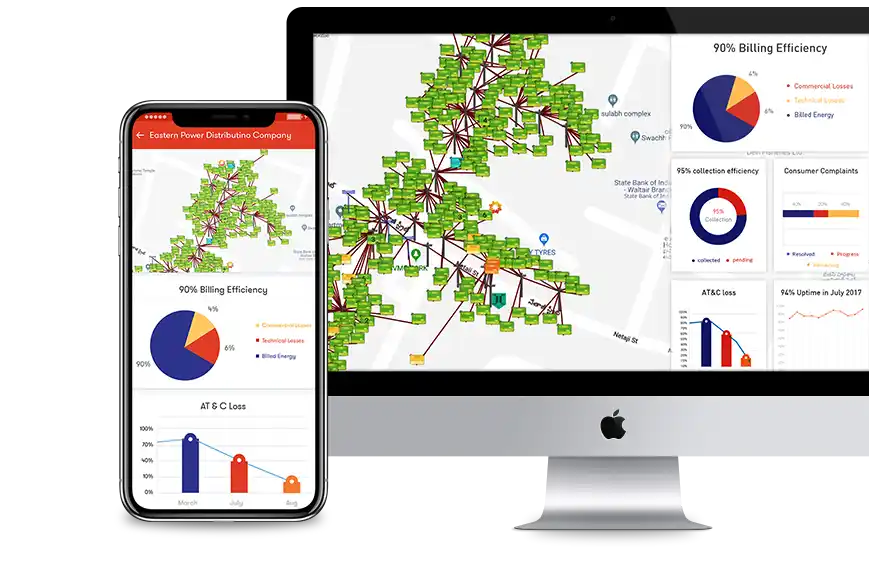
This feeder-level analysis is one of the things that the Avdhaan software platform, developed by Polaris Grids, is designed to enable. When meter data from across a feeder is collected and presented in a dashboard view, engineers can see the outage pattern laid out across the network map and identify the most probable fault location before a crew leaves the office.
Electricity theft is often discussed as a revenue loss problem, and it is. But it also causes genuine network faults. When power is drawn from the network through an unauthorised connection, or when a meter is bypassed in a way that draws unmetered load, the extra current flowing through equipment that was not designed to handle it can cause overheating, insulation failure, and in some cases physical damage to distribution transformers.
Smart meters detect tampering through a combination of methods. Sudden changes in consumption patterns, current flowing through the meter that does not match expected load profiles, physical alerts triggered when the meter cover is opened, and magnetic field detection for external interference are all mechanisms that modern smart meters use to flag suspicious activity.
When these alerts are combined with network-level analytics that compare power injected at the feeder with power recorded at the consumer end, the discrepancy points not just to the existence of theft but to the section of the network where it is most likely occurring. This lets field teams target their inspections rather than conducting broad area surveys.
The smart meters themselves require a communication network to transmit data to the utility's systems. This network, whether it uses RF mesh, power line communication, or cellular connectivity, is itself a source of diagnostic information.
When meters in a specific geographic cluster stop communicating, there are two possibilities. Either the power is out, and the meters have lost supply, or the communication network in that area is experiencing a problem. Distinguishing between these two cases requires looking at whether the meters sent a last-gasp signal before going silent (indicating power loss) or simply stopped responding without warning (indicating a communication failure).
This distinction matters because the response is different. A power outage calls for an electrical crew. A communication failure may call for a network engineer or a relay station inspection. Having the data to make this call quickly saves time at every stage of the response.
Faster fault detection results in shorter outage durations. This is the outcome that consumers care about most. But there is also a less visible benefit: fewer unplanned outages in the first place.
When predictive maintenance flags a failing transformer before it fails, the replacement happens on a schedule. When tamper-related overloading is identified and addressed, the equipment damage that would have followed is avoided. When power quality issues are caught early, the voltage fluctuations that damage consumer appliances are reduced.
The smart meter's role in all of this is fundamentally as a sensor. Each meter is a point on the network that is continuously reporting its status. When thousands of those points are feeding data into a system that knows how to read it, the utility stops flying blind and starts managing the network with actual information.
That shift, from guessing at network conditions to knowing them, is what makes smart meters one of the most consequential operational investments a distribution utility can make.
When a smart meter loses power due to an outage, it sends a signal to the utility's system before losing power entirely. This is called a last gasp message. When multiple meters in the same area send this signal within a short time window, the system can map the outage location and boundary accurately without waiting for consumer complaint calls.
Yes, to a significant degree. Smart meters continuously monitor voltage levels and other power quality indicators. When data from a cluster of meters shows recurring voltage drops or fluctuations, it signals that something in that section of the network is under stress. This allows field teams to inspect and address the issue before it develops into a full failure.
Modern smart meters include multiple tamper detection mechanisms, including alerts when the meter is physically opened, detection of magnetic interference, and monitoring of current flow patterns. When this data is combined with network-level analytics comparing power injected at the feeder against power recorded at the meter, it helps identify where theft is occurring on the network.
By providing precise location data for the fault, smart metering eliminates the time field teams would otherwise spend searching for the problem across a broad area. The crew goes to the right location from the first dispatch, which directly reduces the time between fault occurrence and restoration.
In India, AMISP operators typically use a Meter Data Management System combined with analytics platforms to process and act on smart meter data. Smart meter manufacturers in India like Polaris Grids use its Avdhaan software suite to collect, manage, and analyse meter data across its deployments, providing utilities with dashboards that support both real-time fault detection and long-term predictive maintenance planning.
No. Billing is one function, but modern smart meters serve a much wider operational role, including outage detection, power quality monitoring, tamper detection, remote connection and disconnection, and feeding data into grid management systems. The billing function is better understood as a side effect of the continuous data collection that enables all of these other capabilities.