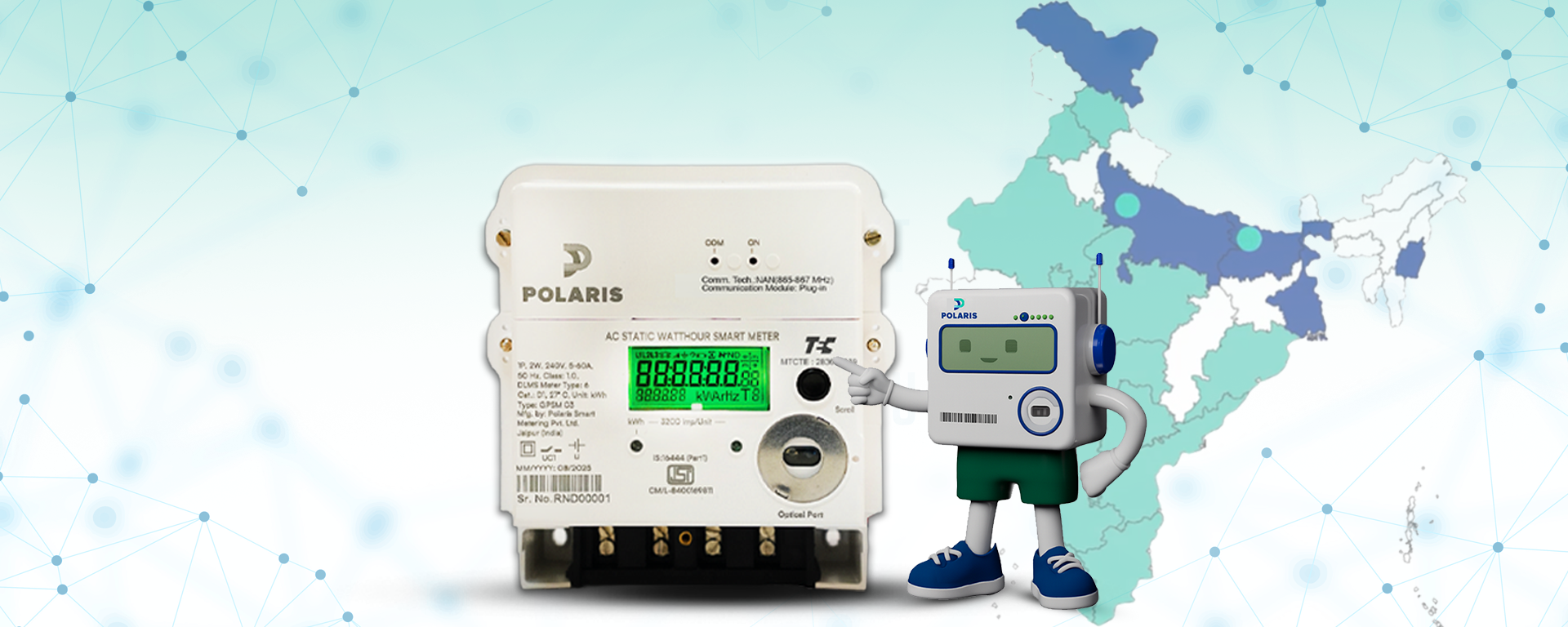
Hey, I'm ORBI!
How Artificial Intelligence Is Reshaping Power Distribution
 Smart Metering
India's power distribution sector is becoming exponentially more complex. Rising electricity demand, the integration of renewable energy, electric vehicles, distributed generation, and increasing consumer expectations are reshaping how utilities operate. Traditional approaches built around manual processes and historical data can no longer keep pace.
For decades, the tools available to manage all of this were largely manual, relying on field engineers, paper logs, and periodic audits. The system worked well enough in an era when power demand was predictable, and grids were relatively simple. However, that era is over.
Renewable energy sources feed power into grids at irregular intervals. Consumer demand patterns have shifted. Urban and rural load requirements diverge more sharply than ever. The old ways of managing distribution are no longer adequate for the complexity utilities now face every day.
Artificial intelligence has entered this space not as a novelty but as a genuine operational tool. And for companies like Polaris, it is central to how modern power distribution is managed.
Artificial Intelligence (AI) has become one of the most talked-about technologies across industries, but in the context of power distribution, its role is both practical and measurable.
At its core, AI in a power grid involves using machine learning models to process large volumes of data from meters, sensors, and network equipment. By identifying patterns, detecting anomalies, and uncovering trends that would be difficult or impossible for humans to recognise in time, AI enables utilities to make faster, more informed operational decisions.
Rather than replacing engineers or grid operators, AI enhances their capabilities. It provides continuous visibility into the health and performance of the distribution network, predicts potential issues before they escalate, and recommends actions that improve reliability, efficiency, and service quality.
From forecasting electricity demand and detecting equipment failures to reducing power theft and optimising network performance, AI is helping utilities solve some of their most persistent operational challenges while laying the foundation for a smarter, more resilient power grid.
Every utility needs to balance supply and demand in real time. Generation capacity that exceeds actual consumption can sit idle and be wasteful, while insufficient generation capacity can make the grid unstable. Getting this balance right requires knowing, with reasonable accuracy, how much electricity consumers will need at any given hour of the day across different zones of the network.
Traditional forecasting relied on historical averages and seasonal patterns. A competent analyst could produce a reasonable estimate, but it was still an estimate, and unusual events would routinely produce demand spikes that the system was not prepared for.
AI-based forecasting models can process weather data, historical consumption records, real-time meter readings, local event schedules, and economic activity patterns simultaneously. The result is a forecast that updates continuously and accounts for variables that traditional methods simply cannot accommodate at scale. When Polaris deploys smart meters across a distribution zone, the data those meters generate feeds directly into these models, improving forecast accuracy with every passing month.
A fault in a power distribution network can originate from many sources—equipment ageing, weather events, overloading, or physical damage. The challenge is that by the time a fault becomes visible as an outage to the utilities, it has already affected consumers and often worsened in severity.
AI changes the detection timeline considerably. Machine learning models trained on network data learn what normal looks like at every point in a distribution system. When readings begin to deviate from normal patterns in ways that suggest a developing fault, the system flags it before failure occurs. This shifts maintenance from reactive to predictive, reducing both the frequency and the duration of outages.
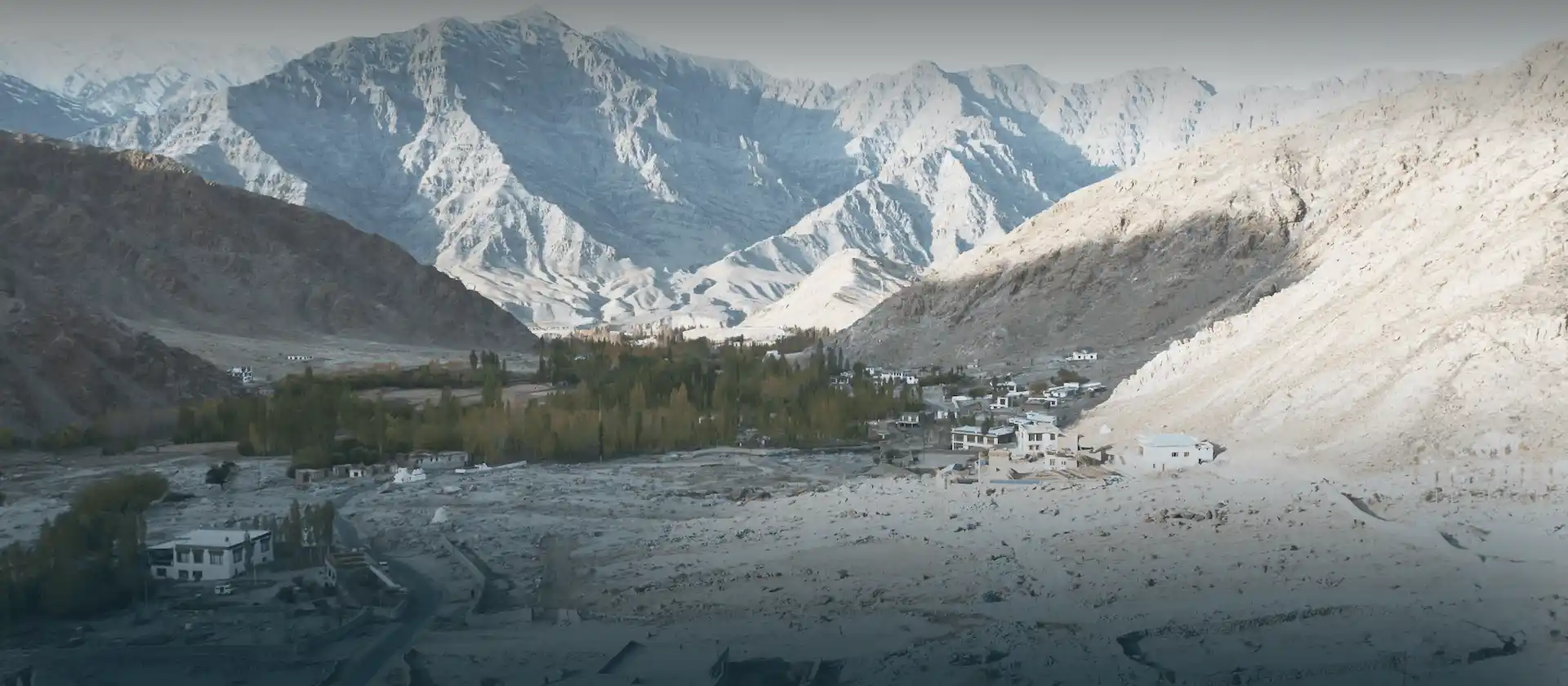
For utilities operating in geographically challenging territories, this matters enormously. Ladakh, where Polaris manages electricity distribution under a 10-year contract, presents unique geographical and logistical challenges for field operations and fault inspection. An intelligent, AI-powered system that can identify likely fault locations with precision before a field visit can help save time, reduce costs, and keep power flowing to communities that depend on it without interruption.
Aggregate Technical and Commercial (AT&C) losses represent one of the most persistent financial drains on Indian utilities. A significant portion of these losses comes from electricity theft, which ranges from simple meter tampering to sophisticated bypass arrangements that are difficult to detect through manual inspection alone.
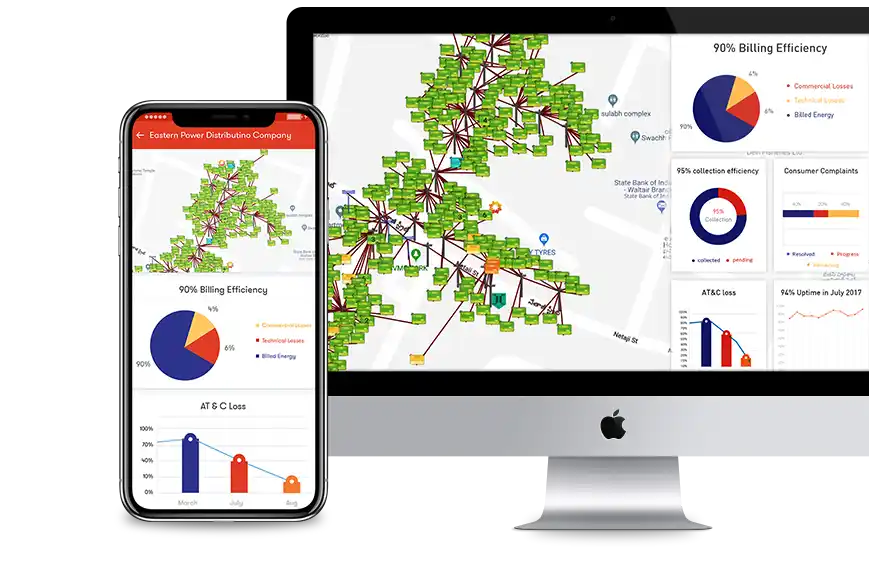
AI-powered analytics can help utilities identify potential revenue leakage by analysing consumption patterns across feeders, distribution transformers, and individual consumer connections. By comparing energy supplied at the network level with consumption recorded downstream, the system can identify unusual deviations and prioritise areas that warrant further investigation.
The intelligence goes beyond simple energy-balance calculations. AI can analyse historical consumption patterns, meter events, load profiles, and other network signals to identify anomalies that may indicate tampering, bypassing, or abnormal consumption—even when individual meter readings may appear normal.
This shifts electricity theft detection from a periodic, inspection-led process to a continuous, data-driven approach. By identifying potential anomalies earlier and helping field teams prioritise high-risk cases, AI can improve investigation efficiency, strengthen revenue assurance, and help utilities reduce commercial losses.
A distribution network is not a single entity. It is a collection of feeders, transformers, and lines, each with its own capacity constraints and each feeding into areas with very different demand profiles. Managing this network so that no single element is consistently overloaded while others remain underutilised requires constant, fine-grained adjustment.
AI optimisation models can manage this at a level of granularity that human operators cannot replicate manually. By continuously monitoring load across the network and recommending or automatically executing switching operations, these systems keep power flows balanced, reduce stress on equipment, and extend the working life of infrastructure that is expensive to replace.
As India moves towards greater integration of solar and other distributed renewable sources, this capability becomes more critical. Solar generation peaks at midday. Consumer demand typically peaks in the evening. Bridging that mismatch intelligently across a network that may include thousands of distribution points is a problem that AI is genuinely well-suited to address.
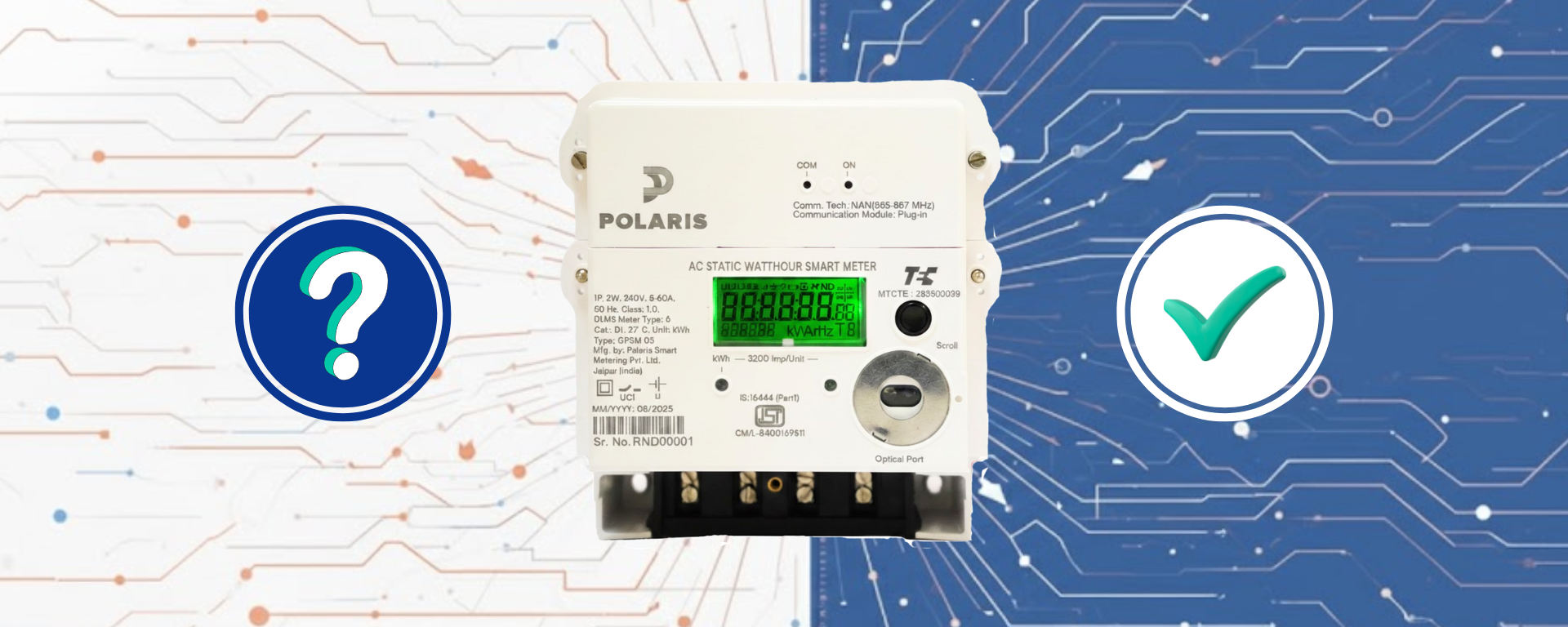
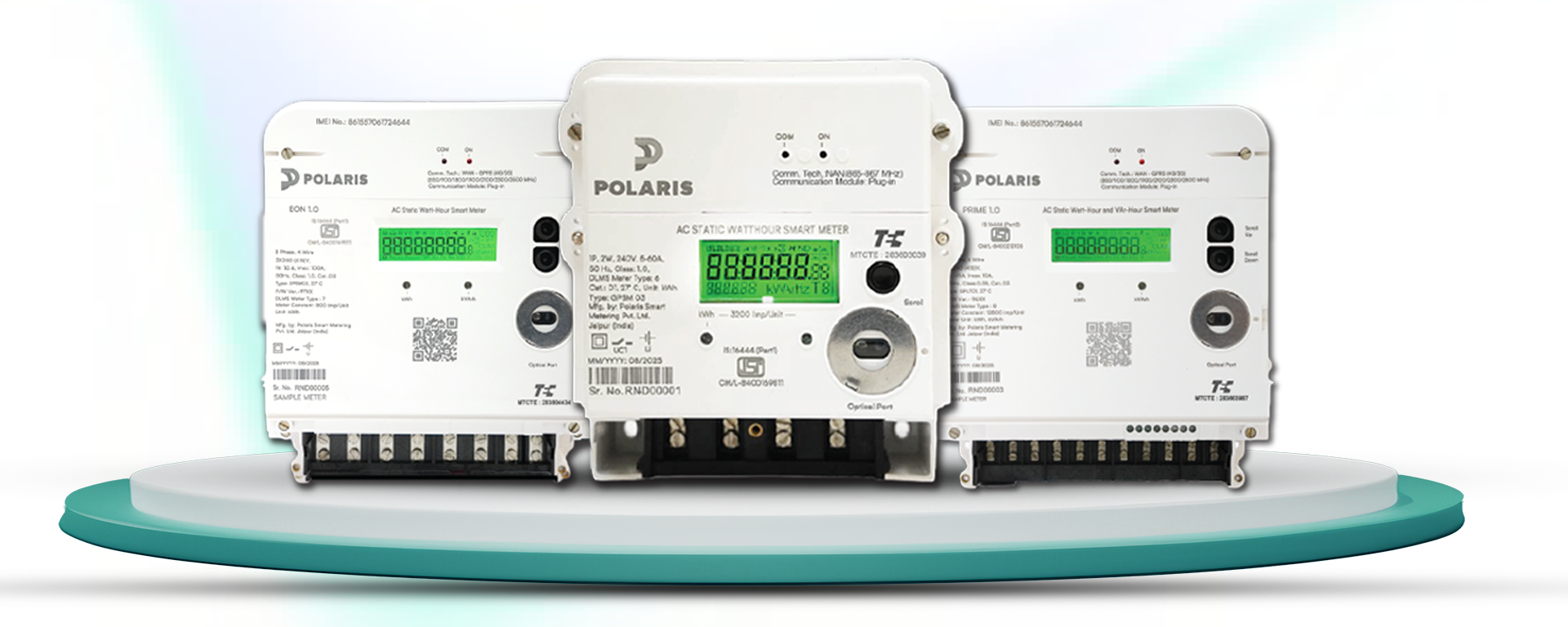
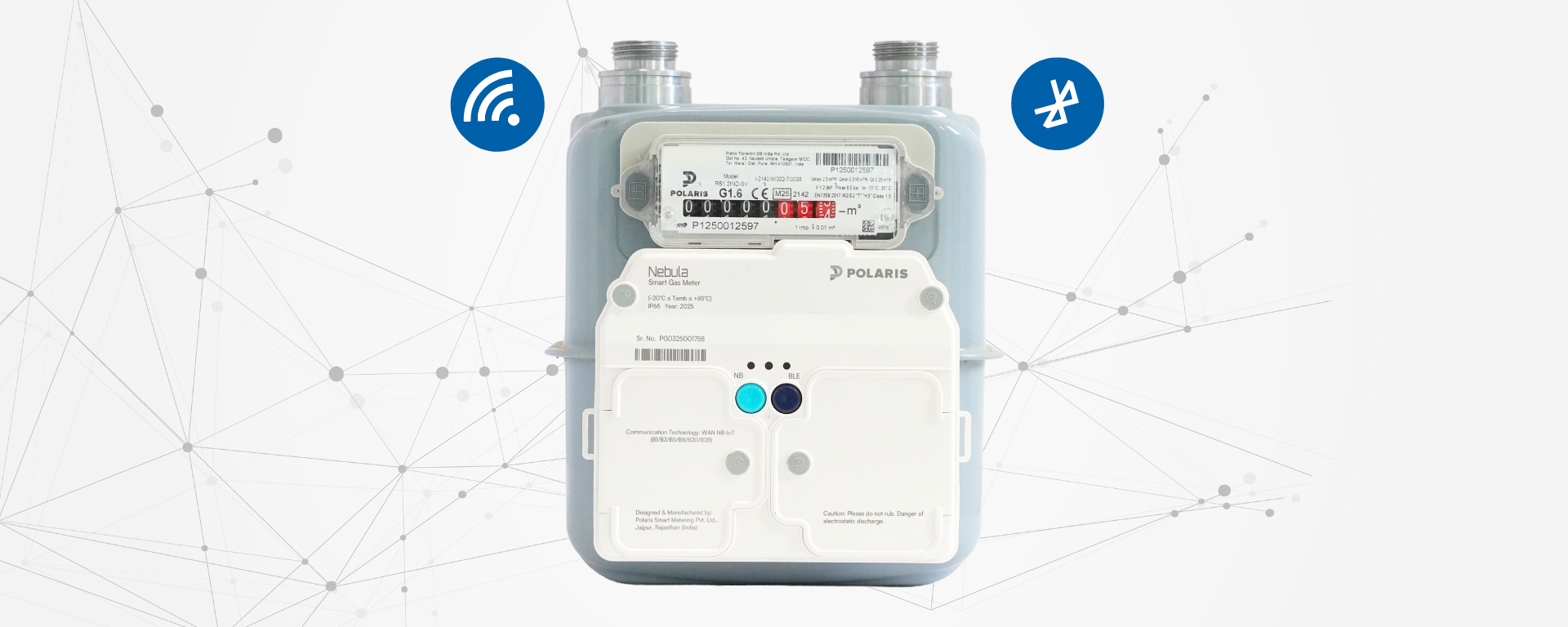
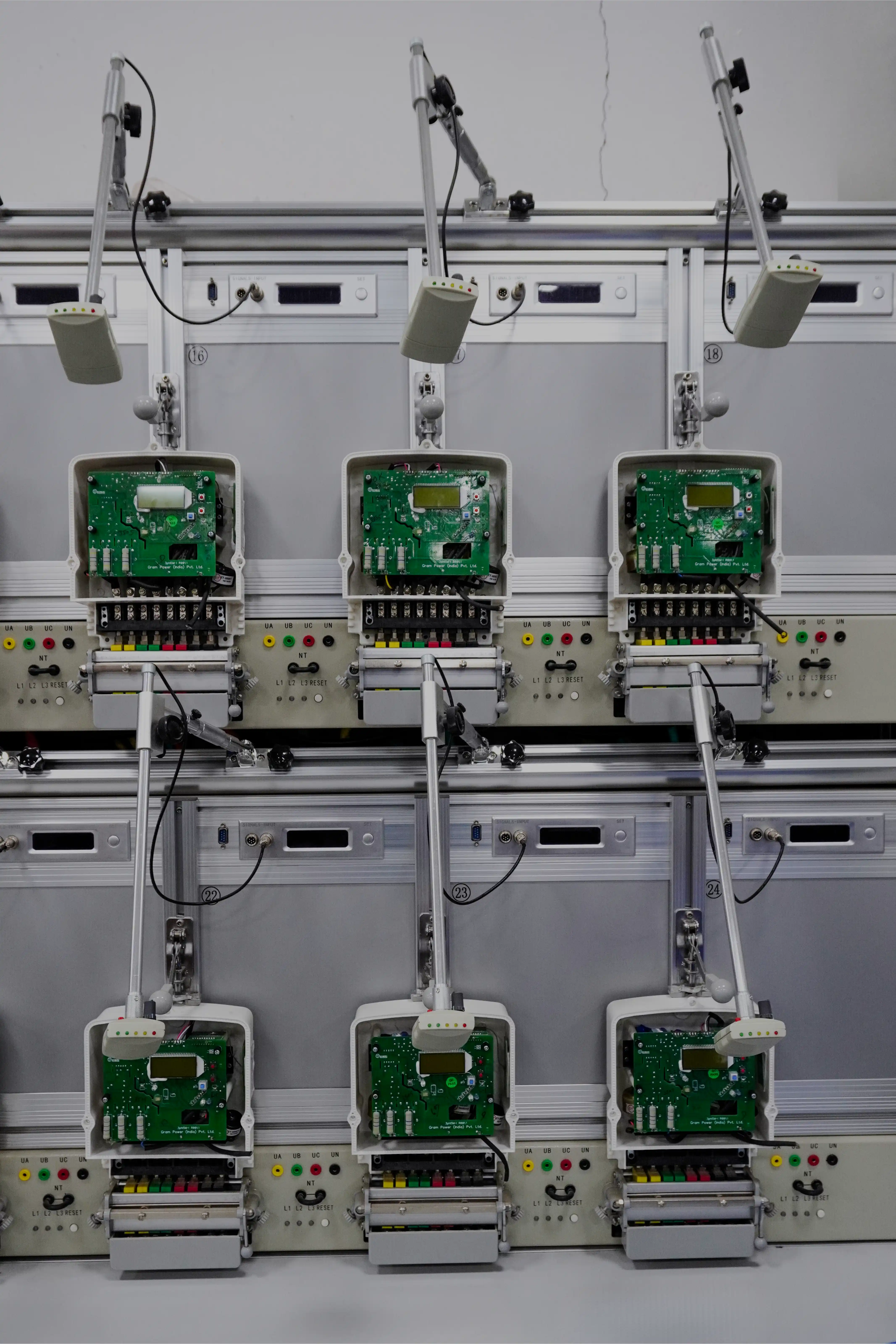
None of the applications mentioned above work without data. The primary source of granular, real-time data in a modern power distribution network is a smart electricity meter.
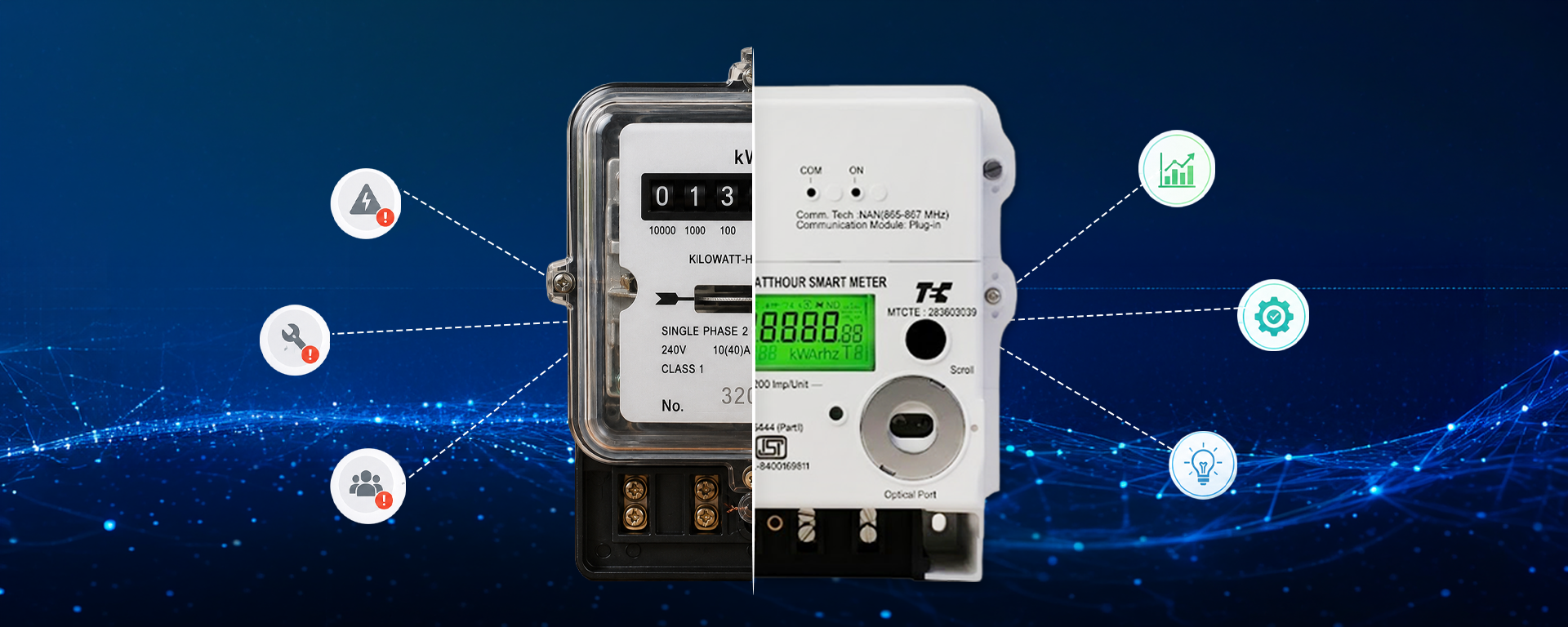
A conventional electricity meter records consumption on a monthly basis when a field agent reads it. That data arrives weeks after the electricity was consumed and provides no visibility into how demand varied hour by hour, day by day, or across different consumer categories.
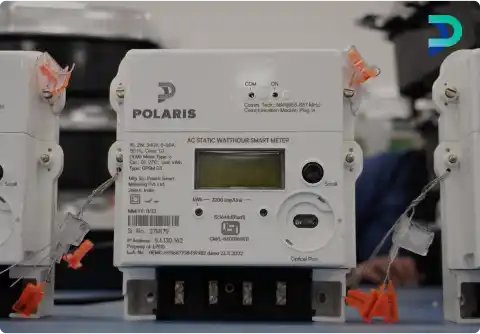
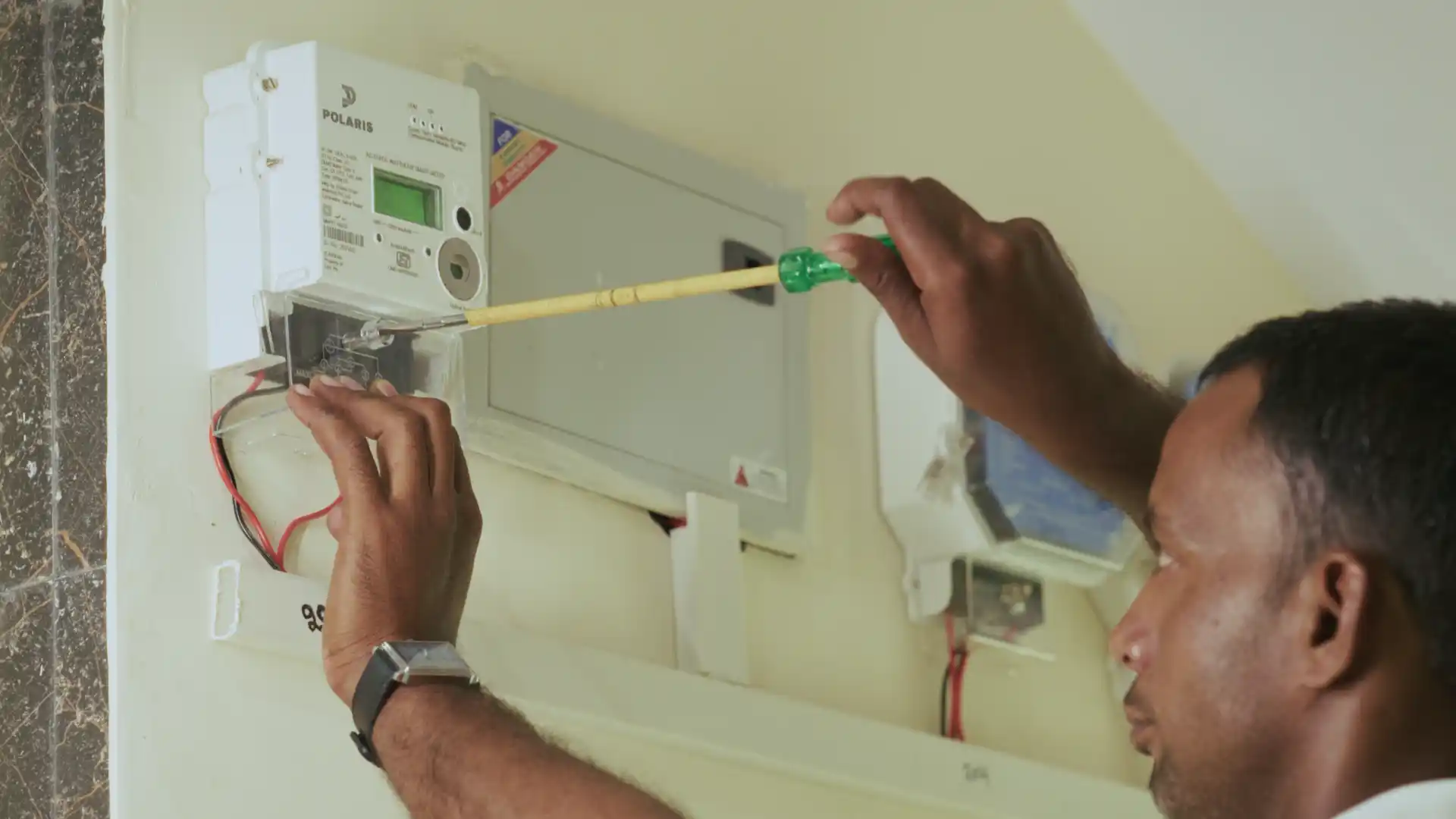
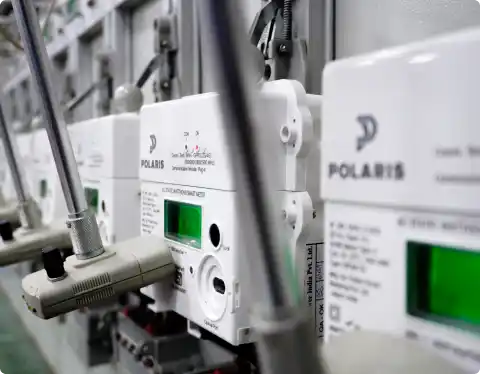
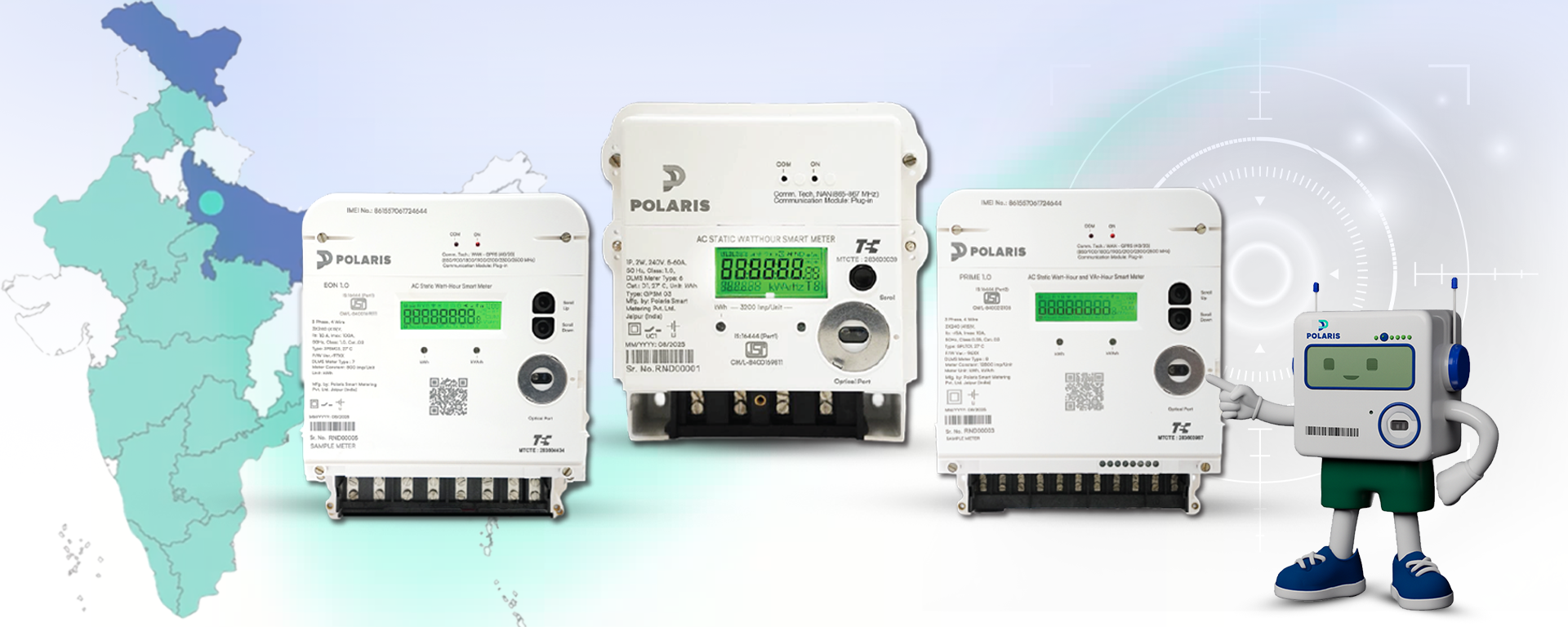
A smart meter communicates consumption data at intervals as short as 15 minutes. It can be read remotely, configured remotely, and disconnected or reconnected without a field visit. When combined with communications infrastructure and a data analytics platform, it becomes the nerve ending of an intelligent distribution system.
| Stakeholder | Key Challenge | How AI Helps |
| Distribution Utilities | High Aggregate Technical & Commercial (AT&C) losses and unreliable revenue collection | Detects potential electricity theft, improves billing accuracy, and helps reduce commercial losses |
| Grid Operators | Balancing real-time electricity supply and demand | Enables continuous demand forecasting and optimises load balancing |
| Field Engineers | Reactive maintenance and difficulty locating faults | Provides predictive maintenance alerts and helps identify potential faults before they lead to outages |
| Consumers | Frequent power outages and limited visibility into energy consumption | Improves service reliability and provides greater transparency into energy consumption data |
| Regulators | Monitoring compliance and utility performance | Provides system-wide visibility, performance monitoring, and data-driven reporting |
AI can transform power distribution, but it is not a standalone solution to every challenge utilities face. Its effectiveness depends heavily on the quality, availability, and reliability of the data and infrastructure supporting it.
AI systems require reliable data from smart meters, sensors, network equipment, and other utility systems. Stable communication networks are equally important for transmitting this data to the platforms where it is processed and analysed. In areas where connectivity is inconsistent, the quality of AI-generated insights may be affected accordingly.
Successful implementation of AI also requires organisational change. Utilities that have operated on manual processes for decades need time and training to extract the full value from AI-powered tools and translate the generated data into actionable insights. Technology can improve decision-making, but its value ultimately depends on how effectively people and processes use it.
AI models also require continuous monitoring, maintenance, and refinement. A forecasting model trained on data from two years ago may not account for changes in consumer behaviour, new industrial loads entering the network, or shifts in how and when renewable generation flows into the system. Keeping models current is therefore an ongoing operational responsibility rather than a one-time technology deployment.
None of these limitations diminish the value of AI. They are simply honest constraints that highlight an important principle: AI delivers the greatest value when it is built on reliable data, connected infrastructure, strong processes, and continuous human oversight.
India's power distribution sector is entering a period of significant transformation, with the government setting ambitious targets for smart meter deployment across the country. The Advanced Metering Infrastructure programme aims to cover the entire country, replacing conventional meters with smart meters that feed data into platforms capable of intelligent analysis.
As deployment scales up, the volume and quality of data available to AI systems will improve substantially. The models will get better. The insights will get more precise. The gap between what utilities know about their networks and what they need to know will narrow.
Simultaneously, the integration of distributed generation, battery storage, and electric vehicle charging into the distribution network will increase the complexity that AI needs to manage. The grid of 2030 will bear little resemblance to the grid of 2010, and the management tools will need to keep pace.
Power distribution is critical infrastructure. When it works well, it is invisible. When it fails, the consequences touch every part of daily life and economic activity. The tools available to manage it are improving in ways that were not practical even a decade ago.
AI is not a replacement for the engineers, operators, and field technicians who keep electricity flowing. It is a set of tools that makes their work more effective, their decisions better informed, and the system they manage more resilient. For a country scaling up energy access at the pace India is, that improvement matters.